
How to Prevent Most Common Plumbing Issues in Atlanta?
Most Common Plumbing Issues in Atlanta. Plumbing issues are common in older Southern cities. High humidity and shifting soil make problems worse. Many homes across Atlanta and the Metro area face similar risks.
Below are the most frequent plumbing concerns and practical prevention tips.
This guide helps homeowners make informed decisions before calling a plumber in Atlanta.
Why Are Plumbing Issues So Common in Atlanta Homes?
Atlanta’s soil expands after heavy rain and contracts during dry periods. That constant movement puts pressure on underground pipes. Many properties also have older sewer systems that were installed decades ago.
Humidity increases corrosion inside metal pipes. Tree roots aggressively seek moisture and often penetrate sewer lines. Occasional winter freezes can damage exposed plumbing.
These regional factors explain why plumbing services in Georgia frequently address similar patterns of damage. When homeowners understand the local risks, they can make informed decisions instead of reacting to emergencies.
1. Clogged Drains and Slow Fixtures
Clogged drains are the most frequent plumbing complaint. Kitchens and bathrooms are equally affected. Grease, soap residue, hair, and food particles gradually restrict flow.
What causes repeated clogs?
Recurring blockages often indicate buildup deeper in the drain system. In older neighborhoods, tree roots may infiltrate sewer lines.
Preventive steps include:
- Avoid pouring grease into sinks.
- Install drain strainers in showers and tubs.
- Flush kitchen drains with hot water weekly.
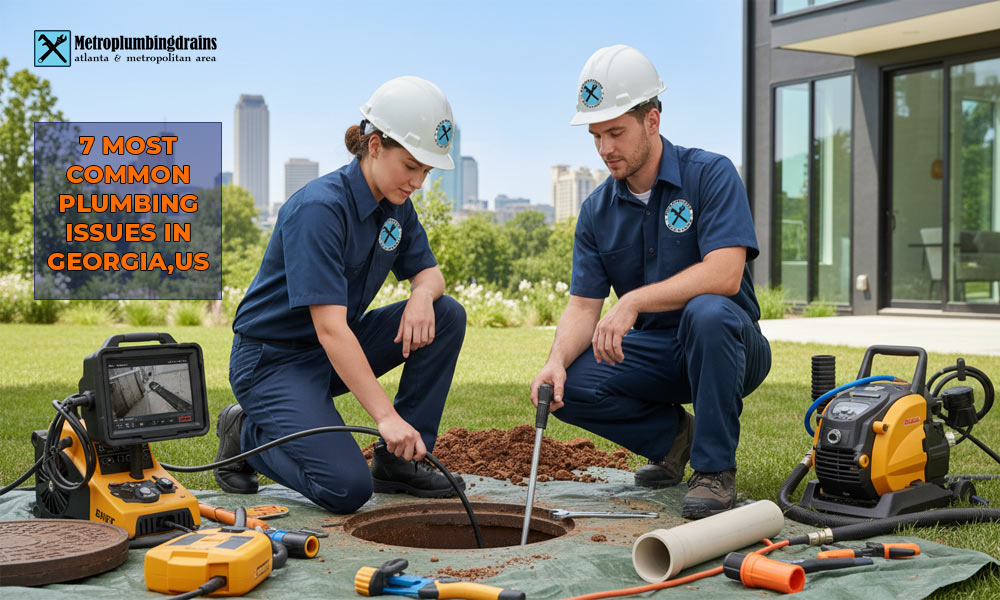
Chemical drain cleaners may damage pipes over time. Persistent problems may require a sewer camera inspection. This diagnostic method allows a sewer plumber to see inside the line without excavation.
Homeowners who schedule occasional inspections reduce the risk of sudden backups.
2. Leaky Pipes and Hidden Water Damage
Small leaks can remain unnoticed for months. Water may accumulate behind walls or beneath flooring. Mold growth and wood rot often follow.
How can you detect a hidden leak?
Look for:
- unexplained increases in your water bill,
- damp drywall,
- peeling paint,
- musty odors.
These signs often appear before visible water damage.
High water pressure is a common contributor. Aging copper pipes may develop pinhole leaks. Flexible supply lines under sinks also degrade over time.
Installing a pressure regulator helps protect plumbing systems. Routine inspections by a plumber in Atlanta can identify vulnerable areas. Early detection prevents structural damage and costly restoration work.
3. Water Heater Problems
Water heaters experience heavy use in most households. Sediment buildup inside the tank reduces efficiency. Mineral content in local water accelerates corrosion.
How long should a water heater last?
Most traditional tank units function for eight to twelve years. Lack of maintenance shortens that lifespan.
Warning signs include inconsistent water temperature, rust-colored water, and unusual rumbling sounds. These symptoms often indicate sediment accumulation or internal corrosion.
Annual tank flushing removes mineral deposits. Replacing the anode rod extends the life of the unit. Many plumbing services in Atlanta Metro area recommend yearly maintenance to avoid unexpected breakdowns.
Ignoring minor issues often results in complete system failure.
4. Sewer Line Damage
Sewer line problems are serious and disruptive. Older clay pipes are especially vulnerable to cracking. Tree roots frequently invade small fractures in the line.
What are the warning signs of sewer trouble?
Multiple drains backing up simultaneously suggest a main line blockage. Gurgling toilets and persistent sewer odors are also red flags.
A sewer camera inspection provides precise visual confirmation of damage. This approach prevents unnecessary digging and reduces guesswork. A qualified sewer plumber can determine whether repair or replacement is necessary.
Addressing sewer issues early protects your foundation and landscaping. Delaying repairs increases the risk of contamination and structural damage.
5. Running Toilets and Silent Leaks
A running toilet wastes significant amounts of water each day. Faulty flappers are the most common cause. Worn fill valves also contribute to continuous flow.
How can you test for silent leaks?
Add a few drops of food coloring to the tank. Wait fifteen minutes without flushing. Color in the bowl indicates a leak.
Replacing internal components is usually simple. However, persistent problems may require professional evaluation. Plumbing services in Georgia frequently resolve water waste issues quickly.
Monitoring toilets regularly prevents higher utility bills.
6. Low Water Pressure
Low water pressure affects comfort and efficiency. Mineral buildup inside pipes can restrict flow. Corroded supply lines may also reduce pressure.
Is low pressure always a plumbing issue?
Not necessarily. Municipal supply fluctuations sometimes contribute to temporary changes.
Start by cleaning faucet aerators and showerheads. Check for hidden leaks that may divert water flow. If the problem continues, consult a plumber in Atlanta for further assessment.
Persistent low pressure may signal more serious pipe deterioration.
7. Burst Pipes During Sudden Freezes
Although winters in Atlanta are usually mild, sudden freezes still occur. Exposed pipes in crawl spaces are particularly vulnerable. Water expands when it freezes, creating intense internal pressure.
Cracks or bursts may follow rapidly. Flooding can cause extensive property damage.
Preventive measures include:
- Insulate exposed pipes before winter.
- Allow faucets to drip during freezing nights.
- Seal air gaps near exterior walls.
Preparation significantly reduces emergency repairs. Preventative steps are more affordable than water damage restoration.
How Often Should You Schedule Plumbing Inspections?
Many homeowners ask this question. Annual inspections are typically sufficient for most properties. Older homes may benefit from more frequent evaluations.
Routine checks identify small problems before they escalate. Modern tools such as sewer camera inspection technology improve diagnostic accuracy. Preventive maintenance extends the lifespan of your plumbing system.
When selecting plumbing services in Atlanta Metro area, verify licensing and experience. Compare reviews and request clear explanations of recommended repairs. An informed homeowner is less likely to face unexpected expenses.
For additional educational resources, visit Metro Plumbing and Drains website.
You can also review community updates at our Facebook page.
Professional insights at our LinkedIn business page.
Direct inquiries can be made at: 470 435-4377, 24/7.
Preventive Action Saves Time and Money
Most plumbing problems in Atlanta develop gradually. Soil movement, humidity, aging pipes, and tree roots contribute to recurring issues. Early recognition makes a significant difference.
Understanding the warning signs allows homeowners to respond calmly and strategically. Preventive maintenance reduces costly emergency calls. Consulting a qualified plumber in Atlanta when concerns arise protects both property value and household safety.
Taking small steps today prevents major disruptions tomorrow.